Newsletter Subscribe
Enter your email address below and subscribe to our newsletter

Enter your email address below and subscribe to our newsletter
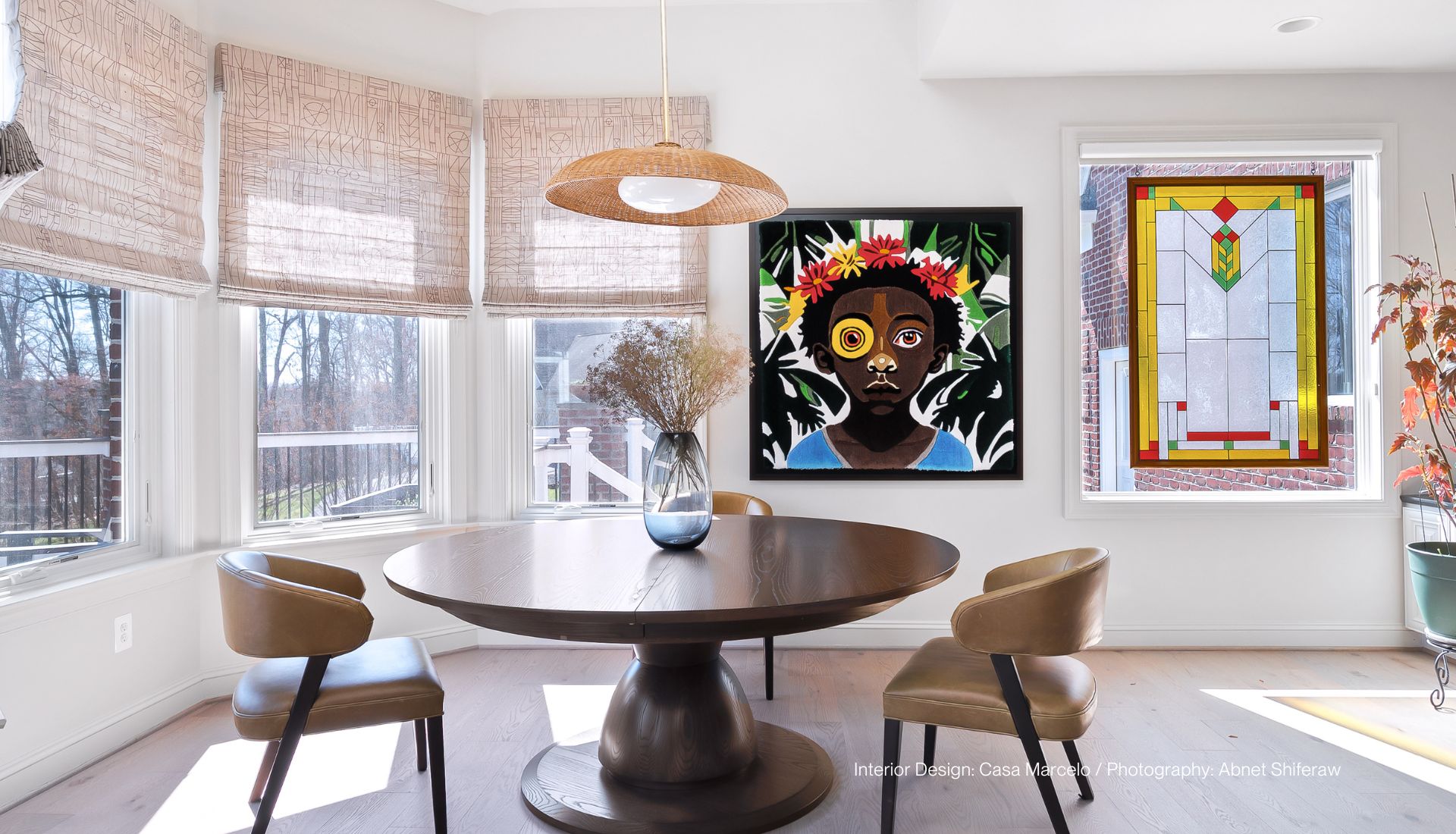
Tasked with updating a 1990s Maryland home, Abigail Horace of Casa Marcelo delivered a soulful, artful redesign—virtually, and while pregnant.
When Abigail Horace first got the inquiry, she almost turned it down. The clients had seen her work in Dwell and reached out after reading a 2020 feature. What began as a virtual consultation for a single craft room in their 11,000-square-foot Maryland home quickly turned into a full-scale interior redesign. But interior designer Abigail Horace, founder of the Brooklyn-based firm Casa Marcelo, said no—twice.
“I was pregnant, and the distance made it feel logistically impossible,” she recalls. “But the client came back and said, ‘We really want to work with you.’ That kind of trust is hard to ignore.”
It paid off. The finished project—dubbed the Finksburg Revival—unites bold color with lived-in warmth, respecting the homeowners’ history while confidently guiding their 1990s interiors into the present day.
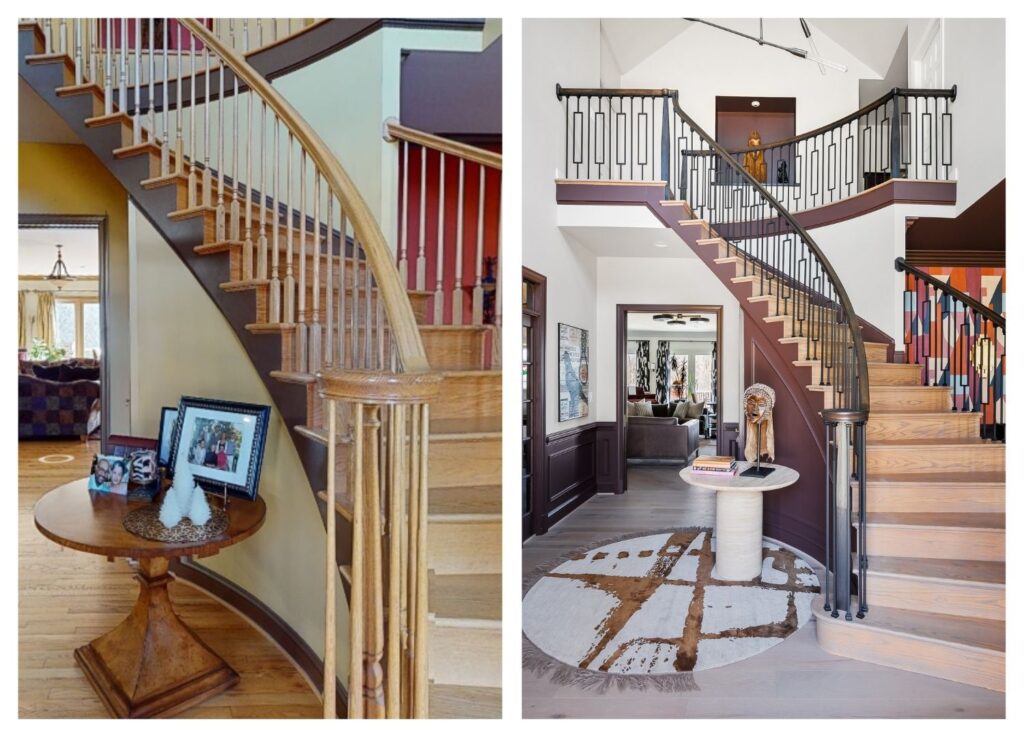
AFTER – Interior Design: Casa Marcelo / Photography: Abnet Shiferaw
The original ask included an unexpected directive: design with purple, red, and pink. “Those aren’t my go-to colors,” says Horace. “Purple especially made me think of the ’90s in the worst way—teal and grape, mall vibes.”
But instead of rejecting the brief, she reinterpreted it. The result: a dark, sophisticated plum tone on the dining room wainscoting, paired with a Kelly Wearstler wallpaper in a muted pink-and-violet palette. “It started with a paint chip from Farrow & Ball,” Horace explains. “Then everything else flowed from there.”
This kind of intuitive color leadership is part of what makes Horace’s design voice so distinct—calm under pressure, anchored in longevity, and deeply aware of how people actually live.
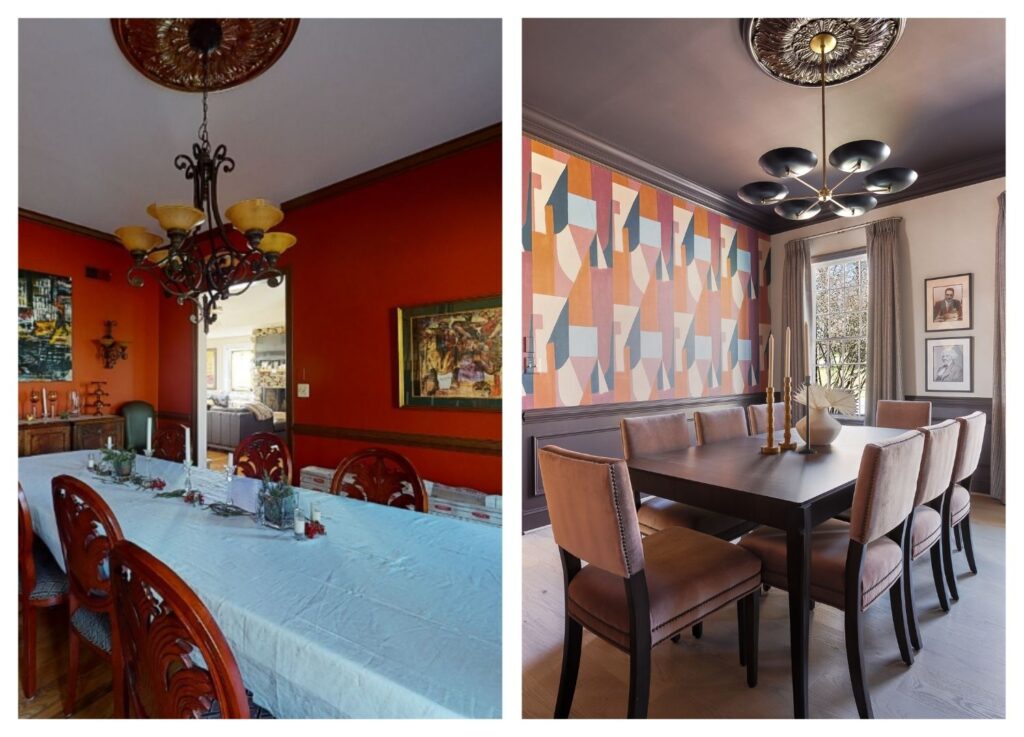
AFTER – Interior Design: Casa Marcelo / Photography: Abnet Shiferaw
The Finksburg home was filled with memory: inherited pieces, beloved books, and two original stained glass windows made by a relative. “You don’t redesign around stained glass every day,” Horace jokes. “But those windows were non-negotiable, so I embraced them.”
Rather than neutralize the space, she used art and texture to balance the intensity. In the kitchen, a custom tufted artwork by a Baltimore artist ties into the glasswork beside it. “That piece makes the room,” says Horace. “And it was entirely theirs. I just helped it shine.”
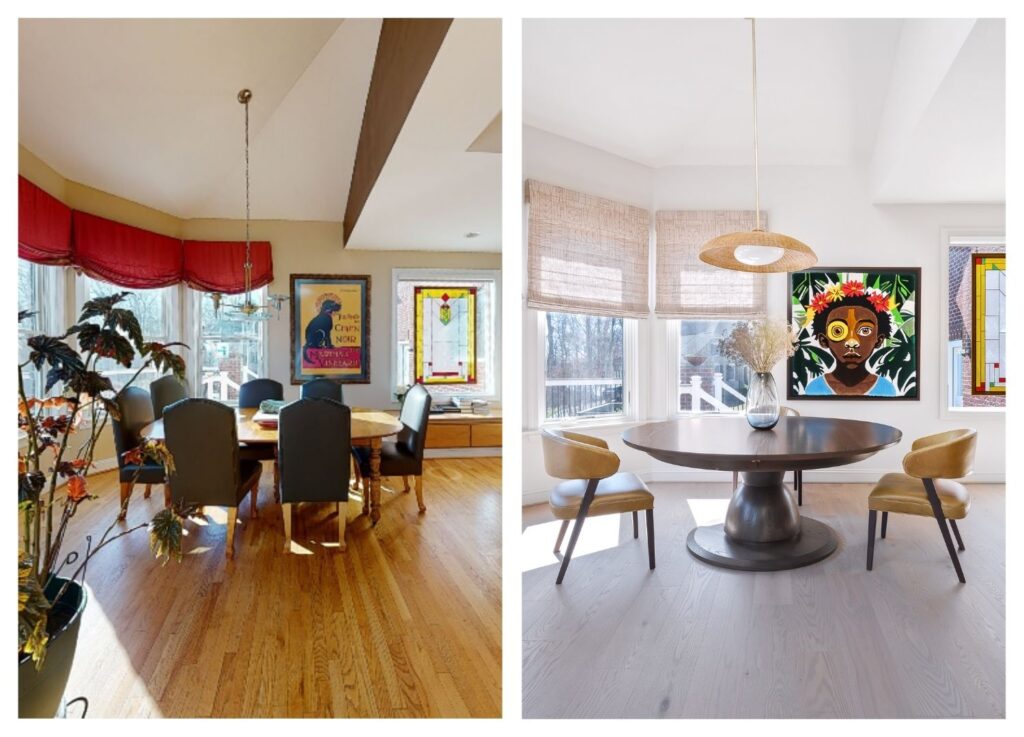
AFTER – Interior Design: Casa Marcelo / Photography: Abnet Shiferaw
The original interiors hadn’t been touched since the home was built. Faux marble columns were removed. A classic 1990s bookshelf was replaced with new millwork that reaches the ceiling. The family’s beloved credenza stayed—but the matching dining table was replaced with a custom piece by Ian Ingersoll.
“Editing is part of honoring a space,” Horace says. “Not everything has to go. But what stays should feel intentional.”
The clients, longtime art collectors and self-described frequent hosts (“They call the house a hostel,” Horace laughs), worked closely with her on layout, scale, and rhythm. Together, they created a space that could flex between everyday life and entertaining at scale.
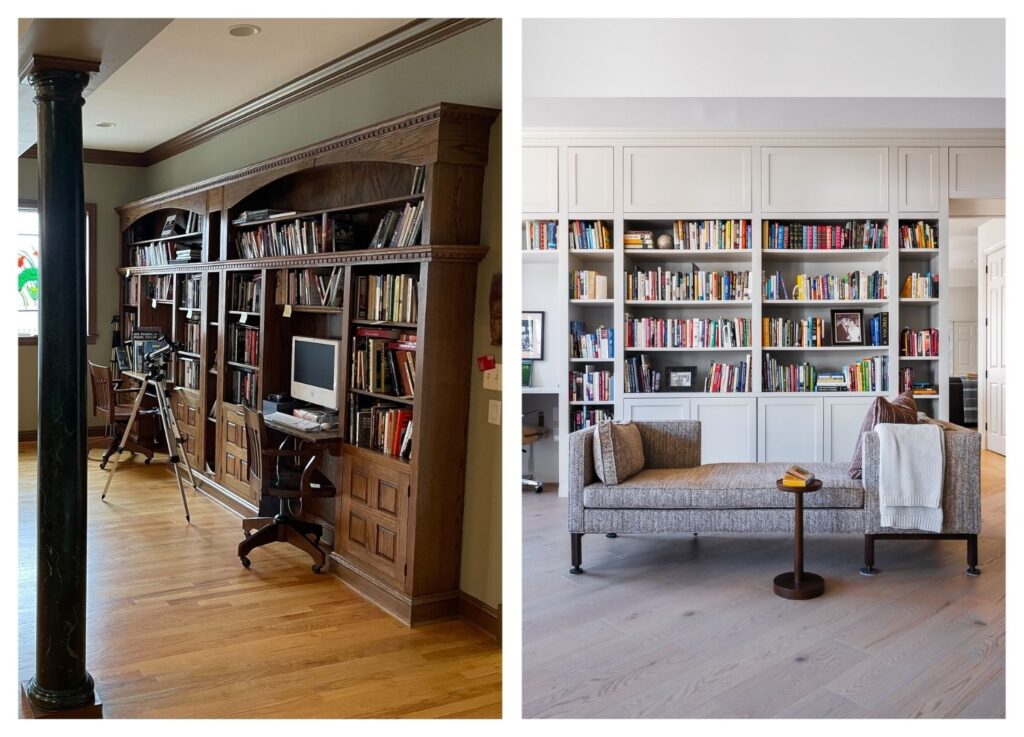
AFTER – Interior Design: Casa Marcelo / Photography: Abnet Shiferaw
Horace visited the site only three times—early measurements, palette review, and final installation. The rest of the project unfolded virtually. The homeowner took an active role in project management, sourcing a local millworker and coordinating vendors based on Horace’s direction.
“They flipped two paint colors by accident,” she says, “but even that worked out. We kept the mistake because it looked good. I think that’s what happens when the client really buys in—they become part of the creative process.”
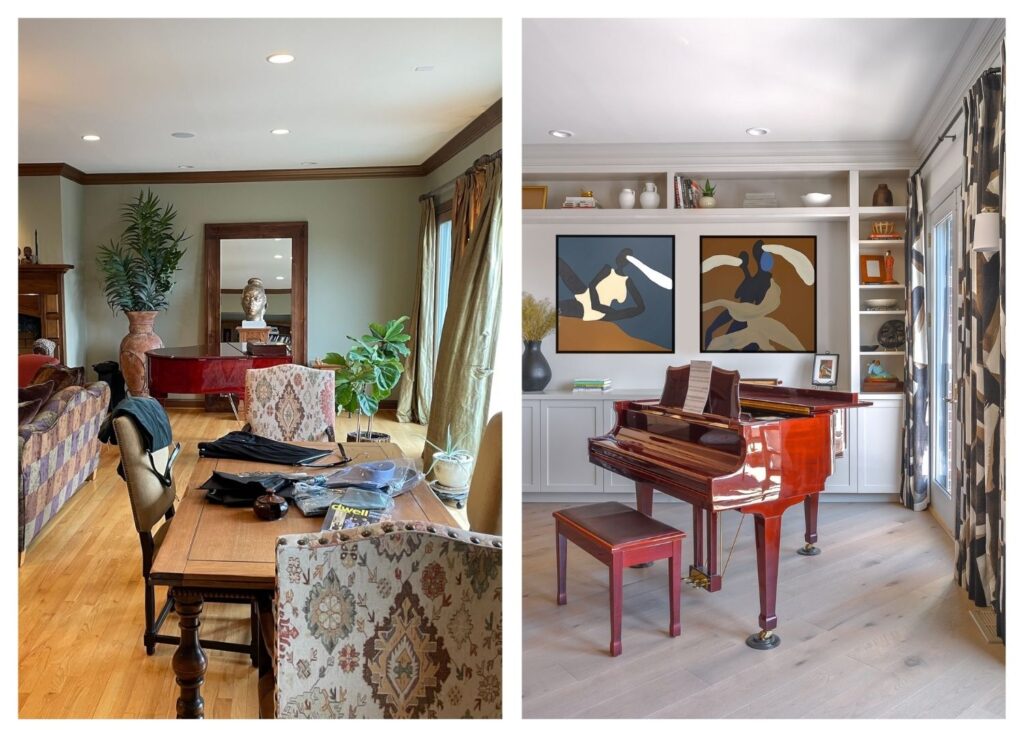
AFTER – Interior Design: Casa Marcelo / Photography: Abnet Shiferaw
If the home’s millwork provided structure, the art provided soul. The couple—Black art collectors with a deep commitment to supporting Black and African artists—had already acquired much of the work before the redesign began. “Every piece had a story,” Horace says. “I just helped figure out where it should live.”
A beaded wall hanging made from rolled-up magazine pages now sits in the great room, repositioned from its previous home in the foyer. “It needed to be seen up close,” she says. “It deserved more attention.”
Other pieces were newly acquired, including works from local Baltimore artists and an eye-catching textile piece placed beside the kitchen’s stained glass. “It was all theirs,” Horace says. “I was just the editor.”
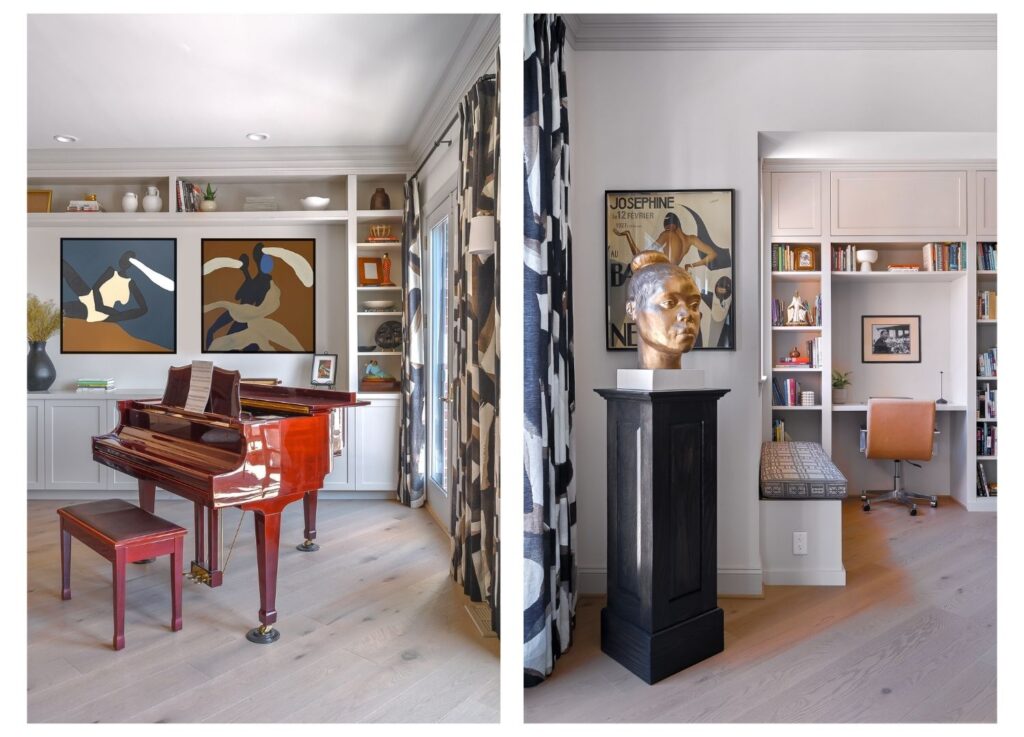
Interior Design: Casa Marcelo / Photography: Abnet Shiferaw
The partnership didn’t end with the Finksburg house. The family has since tapped Horace for a second project—a waterfront investment property in Baltimore they’re temporarily handing over to their daughter. While this next project leans lighter in scope—furnishings, finishes, and color guidance—it continues the same ethos: collaboration, adaptability, and style rooted in lived experience.
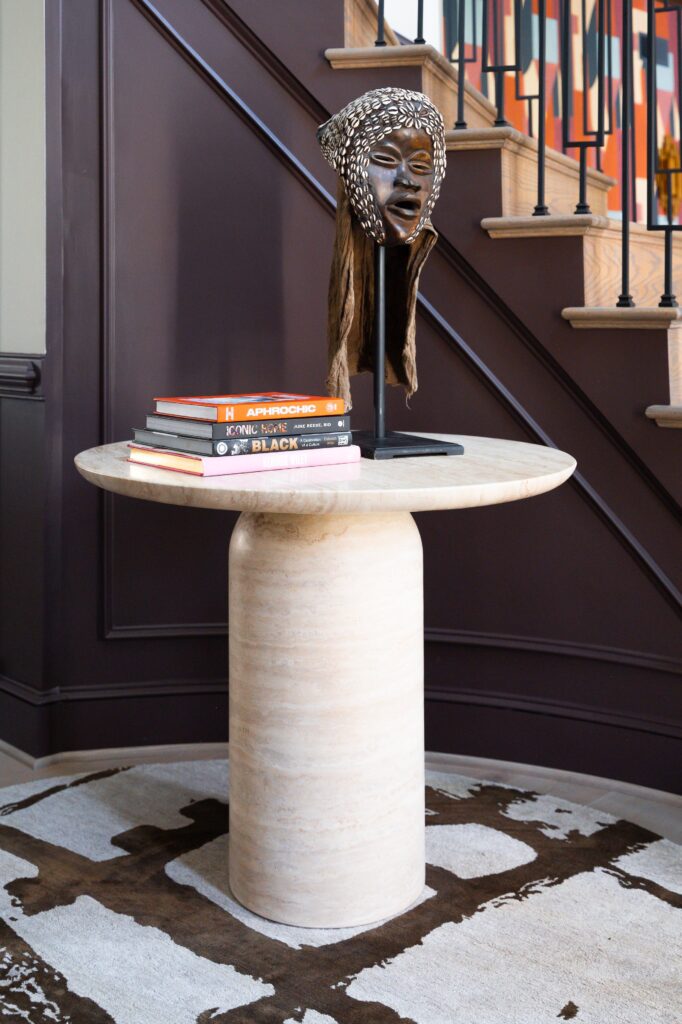
Interior Design: Casa Marcelo / Photography: Abnet Shiferaw
Abigail Horace is the founder of Casa Marcelo, a Litchfield County-based interior design studio known for its rich color palettes, personal storytelling, and high-touch virtual design capabilities.